
PROGRESS REPORT May 2026
My William Merritt Chase class is recently concluded.
Bravura (loose and expressive) painting is wholly incumbent upon an architecture of structural, planar forms that is built up with a sculptural sensibility. A successful bravura portrait should look effortless. As if it was nothing; as natural as breathing. But that is hardly the case.
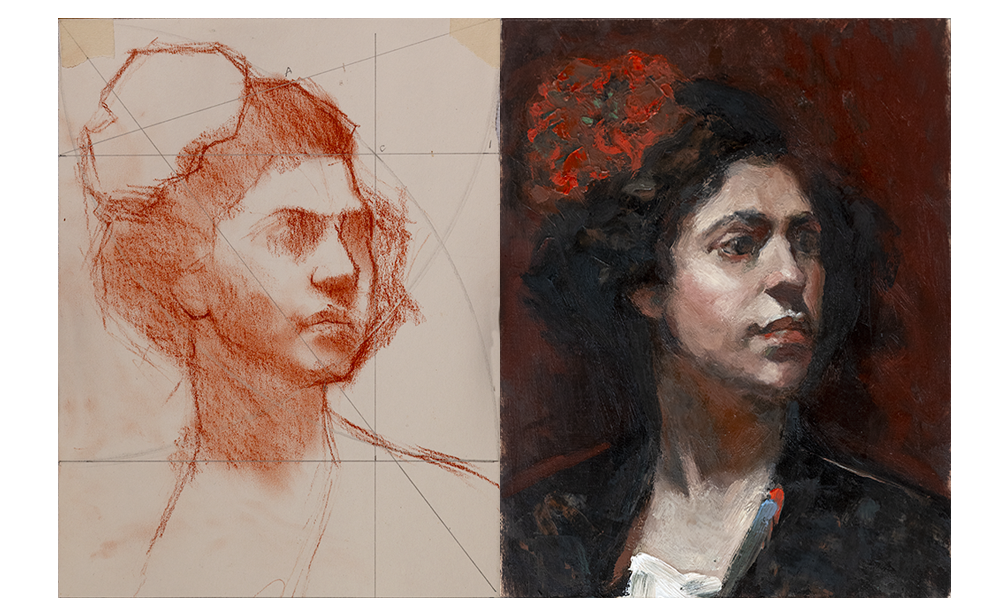
Rarely taught is the underlying applied design theory (also known as dynamic symmetry) that contributes to the Oomph! of Chase's Spanish Woman.
This, along with drawing, formed the core curriculum of both the Ecole des Beaux Arts and the Munich School of the latter 19th Century.
Once the structural armature of the painting is established, the painting proceeds apace with a tactile, sculptural sensibility.
Facial forms are carved out with a concordant sensibility to the underlying anatomy rather than merely illustrated and academically modeled. This is important to effecting space-invasive three-dimensionality and expression.
The full stretch of light to dark / warm to cool is strived for. Paintings are built upon contrast.
The abstract structural surface (patina) of the painting plays an important role. It is the diction of a painter's voice.
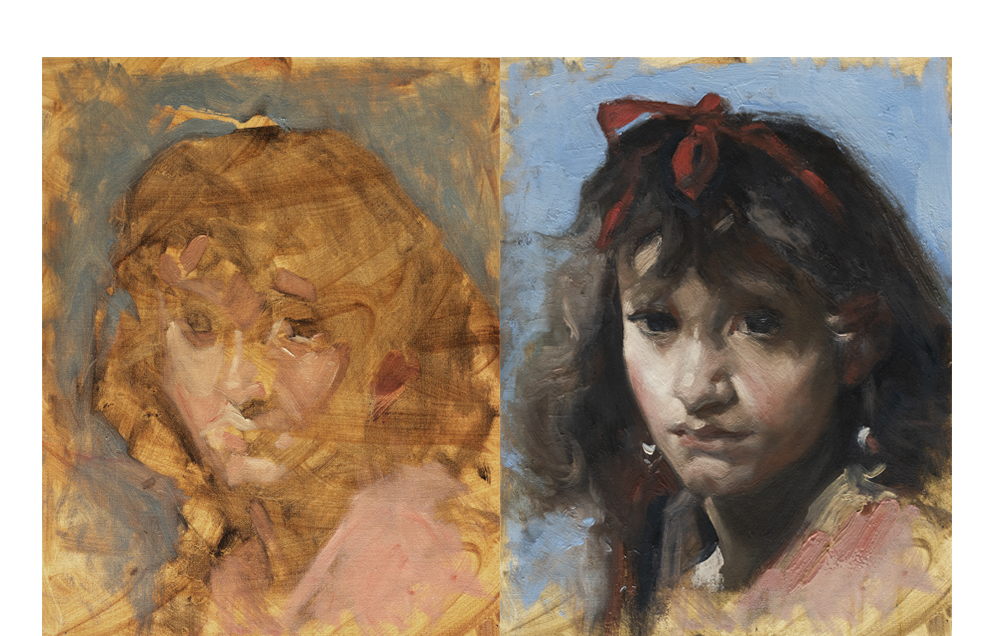
Painting bravura portraits begins with first striking the big shape and massing/blocking-in the primary light/dark pattern. This also initially infers the Notan (light/dark harmony) which sticks the painting to the wall.
Once your measures and plumbs are checked and corrected the initial half-tones are served up in the abstract.
What Sargent meant by 'serving it up in the abstract' was to see through the eyes of a sculptor; distilling the head to its basic planar structures. Sargent advised his students to spend some time painting heads without the features. That way you acquire a deeper understanding of the portrait's underlying architecture.
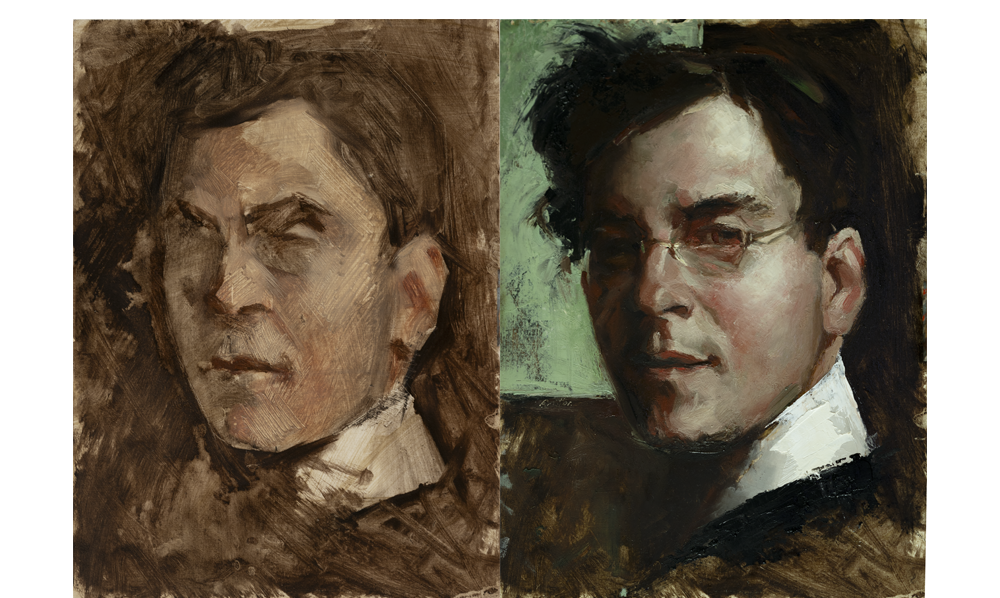
Bravura painting is an additive/subtractive process of applying paint: spotting in color/value notes as if they were pieces of colored clay. The procedure of color spotting is to first, select your color/value; second, place it succinctly; and, third, shape it with a sympathetic concordance to the underlying anatomical form.
As your confidence builds, so, too, will your brush strokes acquire a sureness and clarity that is the essence of Bravura.